Posts

Showing posts with the label The Caribbean

The Brutal Punishments of Black Slaves

Image
One man was such a threat to British rule that they cooked him for 10 hours straight.   The Brutal Punishments of Black Slaves 'Barbarities in the West Indias [Indies]' April 23, 1791 Artist: Hannah Humphrey (Source: UK National Portrait Gallery ) The picture above is a caricature depicting a scene in a British island colony, described in shocking detail during a debate before the British parliament on the abolition of the slave trade. The motion before the floor was presented by the abolitionist William Wilberforce (1759-1833). An excerpt  of a speech from the debate is written at the bottom of the print. Mr Frances [sic] relates 'Among numberless other acts of cruelty daily practised, an English Negro driver, because a young Negro through sickness was unable to work, threw him into a copper of boiling sugar juice, and after keeping him steeped over head and ears for above three quarters of an hour in the boiling liquid whipt him with such severity, that it was near six m...
The Fraud God

Image
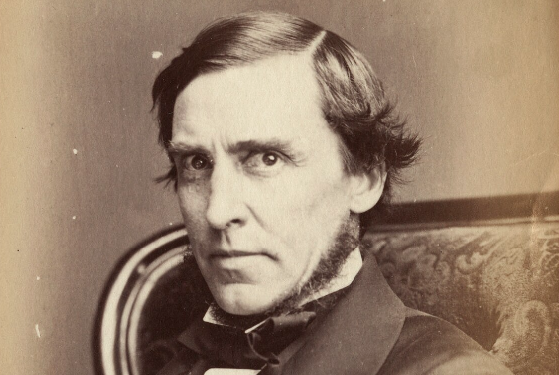
 The Fraud God James Anthony Froude 1860 Photographers: John & Charles Watkins (Source: UK National Portrait Gallery ) I am currently reading the book Froudacity: West Indian Fables by J. A. Froude Explained by J. J. Thomas - a book written and published by Trinidadian author John Jacob Thomas in 1889. Front cover of Froudacity  (1889) by J. J. Thomas (Source: British Library ) Thomas wrote the book as a response to James Anthony Froude's book The English in the West Indies, or The Bow of Ulysses , published the previous year. That book by Froude, an unapologetic racist and White supremacist, was full of lies about Blacks he observed while they were under British colonial rule in the Caribbean islands, especially in Trinidad. Front cover of The English in the West Indies (1888) by J. A. Froude (Credit: Nicholas Laughlin on Flickr ) Penelope Weeping Over the Bow of Ulysses 1779 Creator: Angelica Kauffmann (Source: The William Benton Museum of Art ) Froude title...

The Other Black Revolutions

Image
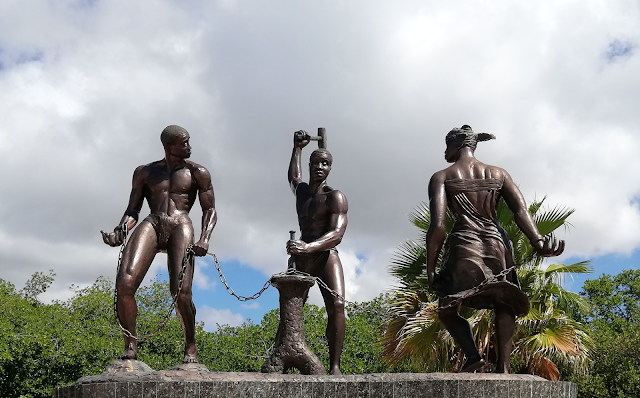
The Other Black Revolutions Desenkadená ("Unchained") Emancipation Monument January 30, 2020 Creator: Nel Simon Freedom Fighting Park, Willemstad, Curaçao Photo by Wikipedia User Kattiel The Haitian Revolution is known for its great success at establishing a civil and independent society of individuals with the potential to determine their own destiny. It was a revolution against all odds. What started as a small camp of rebels became something beyond the wildest imaginations. Not only did the people of Haiti manage to exceed their own expectations, but they also disproved popular prejudices of that period regarding the capabilities of African people. Still, questions remain.  Was the Haitian Revolution an anomaly?  Were there other revolutions like it?

The Top Five Reasons Why Black People Were Not United Against Their Enslavement

Image
Black People Were Never Truly United.  The Top Five Reasons Why Black People Were Not United Against Their Enslavement Shipping Slaves Through The Surf, West African Coast. A Cruiser Signaled in Sight (From a Sketch by a Merchant on the Coast) 1856 (Source:  The Church Missionary Intelligencer: A Monthly Journal of Missionary Information, vol 7 , via Slavery Images ) Black people have been through it all.  We have been through the thick and the thin; the pain and the gain; the highs and lows; the sunshine and the rain. But even while we endured these trials together, we were never a fully unified people. Here are some of the primary reasons why we were not united in the time of our greatest adversity: universal enslavement.

White Male Privilege in the Time of "New World" Slavery

Image
White Male Privilege in the Time of "New World" Slavery Here's a rather comical tale I read recently (at least I found some humor in it). This story comes to us from Haiti during the time that the island nation was a French colony and most of the population consisted of people who were enslaved by the French. The author is a monk by the name of Jean-Baptiste Labat (1663-1738). It is important to note that Labat was himself a slave-owner and the kind who did not mind whipping his slaves viciously for their " disobedience ." This story demonstrates the stratification of privilege that existed in the time of slavery. It further shows how any White man - no matter their level of intelligence - was able to finesse and finagle their way up the social ladder. In this case, the pathway to wealth was an older White woman and that wealth was built on the backs of African slaves. The story begins... D'Artagnan from The Musketeers, A Drama by Alexandre Dumas and Auguste...